
Untrap Kansas! End cruel trapping methods on public lands in Kansas.
The Issue
TRAPPING IS TORTURE.
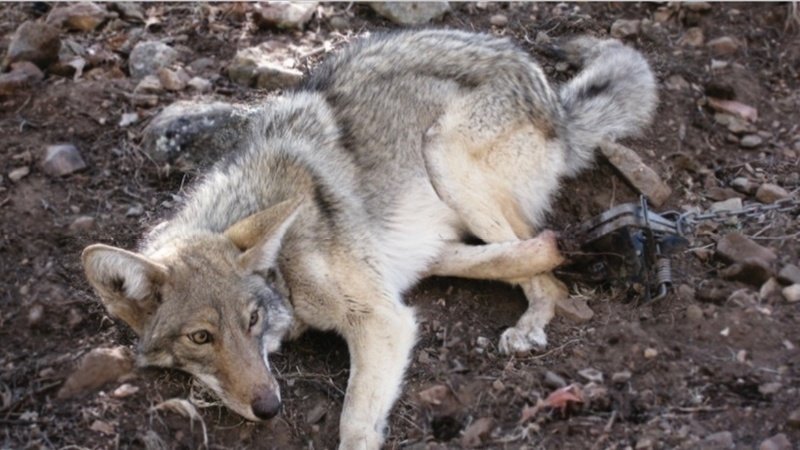
No trap is humane. All traps are indiscriminate. In a recent third-party evaluation of Kansas trapping and hunting policies and regulations, Kansas received a grade of D+. Current trapping methods in Kansas are a form of torture for their victims. Animals are sentient beings, and all traps cause agonizing deaths. Because traps are indiscriminate, they often result in the unwanted deaths of valued species needed to maintain ecological balance in our environment. In Kansas, the primary target of traps is coyotes.
Current trapping methods in Kansas inflict tremendous pain and suffering; such as painful injuries from the trap itself or as the animal tries to flee capture. Death from thirst, dehydration, or predation is a common consequence. Animals still alive when trappers return to check their traps are usually bludgeoned, often with a baseball bat, or strangled to death. The use of these shocking and sadistic methods on animals who are terrified and unable to defend themselves are justified as "humane," "efficient," and "fur-saving" by trappers, hunters, and a variety of organizations in Kansas supporting current regulations governing trapping and hunting. If wildlife services intervenes before the trappers, the animals are euthanized and never given the opportunity for rehabilitation.
One consequence of these methods and policies is the orphaning of young pups, kittens, kits, and other species; which is often a death sentence for the orphans too young to fend for themselves. Indiscriminate trapping can also impact the precarious recovery of imperiled species; and has led to life-threatening injuries and deaths of animals the traps were not intended to capture. Some of those animals have even been beloved pets, such as two dogs recently seriously injured in steel leghold traps set in a scenic park in Mission Hills, Kansas.
The park, Peetwood Park, is a popular stopping place for runners, walkers, dog walkers, and a variety of wildlife. The city council hired a local nuisance wildlife control company to address what was described by city officials as "an increase in coyote activity."
The city reported sending out mailers to Mission Hills' residents notifying them a week before the traps were set in the park. Four traps were set in early February 2023 in different locations within the park. The city reported that the locations were in "unmaintained areas of the park." According to the city, signs were posted seven days before the traps were set. The signs read: "Nuisance Animal Trapping in Progress." The signs did not include any information about the purpose of the trapping, the kind of traps used, nor the specific location of the traps.
The owner of the pets injured by the traps did not receive the mailer sent by Mission Hills because she resides in a different city. Peetwood Park is within walking of her residence, and so it has been a favorite destination for both she and her dogs, Oreo and Fred. Oreo is a 14-year-old Boston Terrier with arthritis; and Fred is an 11-year-old mixed breed.
Oreo was the first to get caught by a trap. When the owner struggled to free Oreo, she released Fred's leash. Fred wandered off and was soon caught by a trap in a different location. Terrified by her pets' howling and profuse bleeding, the owner continued to struggle with the traps despite her inexperience with trap-release techniques and her risk of being bitten. A Good Samaritan called animal control who arrived approximately 30 minutes later. By that time, Oreo was unconscious but still alive; Fred was conscious and in considerable pain; and their owner was severely traumatized and bleeding from bite wounds.
Both pets were taken to the closest veterinary emergency hospital. Both suffered serious injuries to their legs from the steel traps, both had multiple fractures in their jaws, and both suffered the loss of more than 12 teeth each from trying to escape the traps. They are still recovering from their injuries. The owner is still trying to recover from a post-traumatic stress reaction to the incident.
The city of Mission Hills has reported that all steel traps have been removed from Peetwood Park. No information is yet available about the city's future trapping plans, nor their intentions regarding the more than $20,000 in medical costs for the two pets.
The trauma experienced by Oreo, Fred, and their owner is just one example of the risks of indiscriminate trapping. There have been many other incidents, and many of those more heart-wrenching than this because the victim did not survive or was euthanized because of the severity of the injuries. What all have in common is the trauma experienced by the trapped animal, and the apparent indifference and denial by trappers of the terror, agony, and suffering experienced by the victim.
In Kansas, traps are not monitored with the frequency specified by current regulations; nor are state wildlife services able to enforce current regulations in all the ways needed because of limited staff and resources. In 2022, the number of paid license holders in Kansas was 248,430. The number of total hunting licenses, tags, permits, and stamps was 468,485. The number of staff in the KDWP Law Enforcement Division was 83, which included 61 game wardens, 2 investigators, and other support personnel.
Validated scientific research has shown that predator populations do not need management by trapping or any other lethal means to maintain stable, sustainable, and ecologically balanced populations. In fact, such methods are counter-productive and tend to trigger increases in predator populations. Native carnivore populations are self-regulating; and carnivores are best left to their own evolutionary devices of self-regulation and predator-prey cycles.
More than 100 countries and seven states have banned leghold traps—yet the U.S. government employs more leghold traps than any other country in the world--leghold traps are a primary tool used by the USDA’s “Wildlife Services” program. Every year at least 100,000 bobcats, coyotes, wolves, foxes, mountain lions, and other wild animals are trapped and killed by USDA Wildlife Services. This figure does not include the tens of thousands of animals trapped and killed by commercial and private fur trappers or during killing contests, also known as bloodsports.
Current trapping methods are often justified by claims that they contribute to wildlife management. Science shows that trapping serves no legitimate wildlife management purpose. Instead, it’s a form of torture that causes immense suffering and harm to individual animals, and would be considered a violation of state anti-cruelty laws if used on our domesticated companion animals.
Help us put a stop to cruel trapping nationwide, state by state. Please sign our petition to end inhumane, lethal trapping methods on public lands in Kansas. Thank you for your support and compassion.
Heartland Coyote Coexistence Project:
Facebook: https://www.facebook.com/groups/1007418680241097/
Nextdoor: https://nextdoor.com/g/y20j9rdtk/
Photo courtesy of Project Coyote.

3,526
The Issue
TRAPPING IS TORTURE.
No trap is humane. All traps are indiscriminate. In a recent third-party evaluation of Kansas trapping and hunting policies and regulations, Kansas received a grade of D+. Current trapping methods in Kansas are a form of torture for their victims. Animals are sentient beings, and all traps cause agonizing deaths. Because traps are indiscriminate, they often result in the unwanted deaths of valued species needed to maintain ecological balance in our environment. In Kansas, the primary target of traps is coyotes.
Current trapping methods in Kansas inflict tremendous pain and suffering; such as painful injuries from the trap itself or as the animal tries to flee capture. Death from thirst, dehydration, or predation is a common consequence. Animals still alive when trappers return to check their traps are usually bludgeoned, often with a baseball bat, or strangled to death. The use of these shocking and sadistic methods on animals who are terrified and unable to defend themselves are justified as "humane," "efficient," and "fur-saving" by trappers, hunters, and a variety of organizations in Kansas supporting current regulations governing trapping and hunting. If wildlife services intervenes before the trappers, the animals are euthanized and never given the opportunity for rehabilitation.
One consequence of these methods and policies is the orphaning of young pups, kittens, kits, and other species; which is often a death sentence for the orphans too young to fend for themselves. Indiscriminate trapping can also impact the precarious recovery of imperiled species; and has led to life-threatening injuries and deaths of animals the traps were not intended to capture. Some of those animals have even been beloved pets, such as two dogs recently seriously injured in steel leghold traps set in a scenic park in Mission Hills, Kansas.
The park, Peetwood Park, is a popular stopping place for runners, walkers, dog walkers, and a variety of wildlife. The city council hired a local nuisance wildlife control company to address what was described by city officials as "an increase in coyote activity."
The city reported sending out mailers to Mission Hills' residents notifying them a week before the traps were set in the park. Four traps were set in early February 2023 in different locations within the park. The city reported that the locations were in "unmaintained areas of the park." According to the city, signs were posted seven days before the traps were set. The signs read: "Nuisance Animal Trapping in Progress." The signs did not include any information about the purpose of the trapping, the kind of traps used, nor the specific location of the traps.
The owner of the pets injured by the traps did not receive the mailer sent by Mission Hills because she resides in a different city. Peetwood Park is within walking of her residence, and so it has been a favorite destination for both she and her dogs, Oreo and Fred. Oreo is a 14-year-old Boston Terrier with arthritis; and Fred is an 11-year-old mixed breed.
Oreo was the first to get caught by a trap. When the owner struggled to free Oreo, she released Fred's leash. Fred wandered off and was soon caught by a trap in a different location. Terrified by her pets' howling and profuse bleeding, the owner continued to struggle with the traps despite her inexperience with trap-release techniques and her risk of being bitten. A Good Samaritan called animal control who arrived approximately 30 minutes later. By that time, Oreo was unconscious but still alive; Fred was conscious and in considerable pain; and their owner was severely traumatized and bleeding from bite wounds.
Both pets were taken to the closest veterinary emergency hospital. Both suffered serious injuries to their legs from the steel traps, both had multiple fractures in their jaws, and both suffered the loss of more than 12 teeth each from trying to escape the traps. They are still recovering from their injuries. The owner is still trying to recover from a post-traumatic stress reaction to the incident.
The city of Mission Hills has reported that all steel traps have been removed from Peetwood Park. No information is yet available about the city's future trapping plans, nor their intentions regarding the more than $20,000 in medical costs for the two pets.
The trauma experienced by Oreo, Fred, and their owner is just one example of the risks of indiscriminate trapping. There have been many other incidents, and many of those more heart-wrenching than this because the victim did not survive or was euthanized because of the severity of the injuries. What all have in common is the trauma experienced by the trapped animal, and the apparent indifference and denial by trappers of the terror, agony, and suffering experienced by the victim.
In Kansas, traps are not monitored with the frequency specified by current regulations; nor are state wildlife services able to enforce current regulations in all the ways needed because of limited staff and resources. In 2022, the number of paid license holders in Kansas was 248,430. The number of total hunting licenses, tags, permits, and stamps was 468,485. The number of staff in the KDWP Law Enforcement Division was 83, which included 61 game wardens, 2 investigators, and other support personnel.
Validated scientific research has shown that predator populations do not need management by trapping or any other lethal means to maintain stable, sustainable, and ecologically balanced populations. In fact, such methods are counter-productive and tend to trigger increases in predator populations. Native carnivore populations are self-regulating; and carnivores are best left to their own evolutionary devices of self-regulation and predator-prey cycles.
More than 100 countries and seven states have banned leghold traps—yet the U.S. government employs more leghold traps than any other country in the world--leghold traps are a primary tool used by the USDA’s “Wildlife Services” program. Every year at least 100,000 bobcats, coyotes, wolves, foxes, mountain lions, and other wild animals are trapped and killed by USDA Wildlife Services. This figure does not include the tens of thousands of animals trapped and killed by commercial and private fur trappers or during killing contests, also known as bloodsports.
Current trapping methods are often justified by claims that they contribute to wildlife management. Science shows that trapping serves no legitimate wildlife management purpose. Instead, it’s a form of torture that causes immense suffering and harm to individual animals, and would be considered a violation of state anti-cruelty laws if used on our domesticated companion animals.
Help us put a stop to cruel trapping nationwide, state by state. Please sign our petition to end inhumane, lethal trapping methods on public lands in Kansas. Thank you for your support and compassion.
Heartland Coyote Coexistence Project:
Facebook: https://www.facebook.com/groups/1007418680241097/
Nextdoor: https://nextdoor.com/g/y20j9rdtk/
Photo courtesy of Project Coyote.
Petition Updates
Share this petition
Petition created on April 15, 2023